Fruit Wine
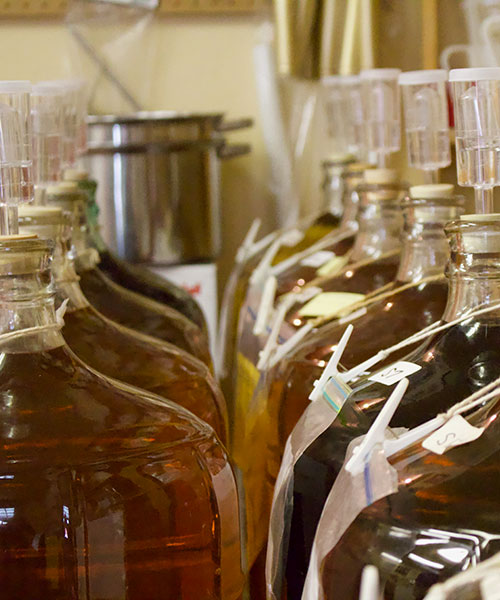
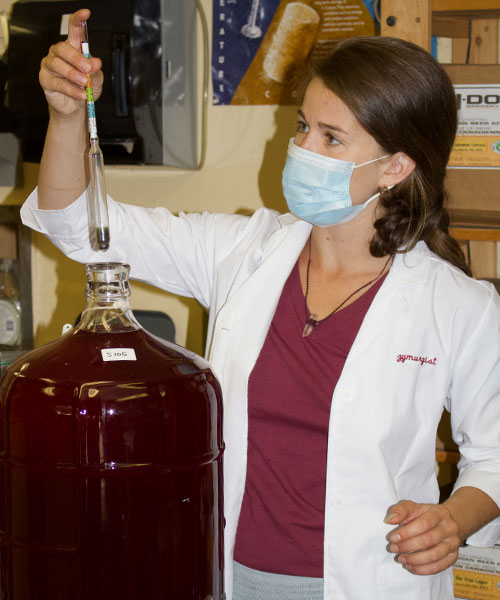
These are wines that we make from scratch, not a kit.
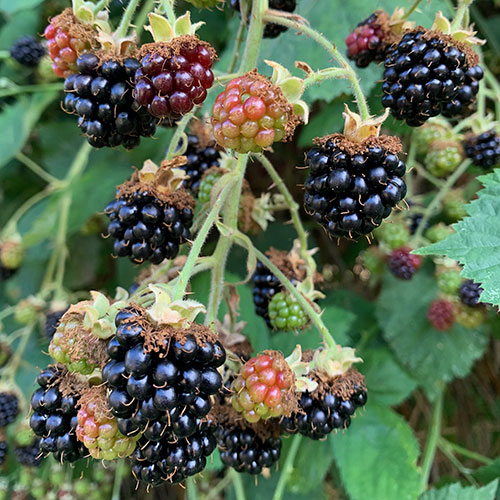
A large part of our business is making wine from people’s own fruit. It can be from your own garden (plum and raspberry are the most popular) or from wild fruit (Cortes abounds with wild [organic] blackberries!). We also makea lot of apple cider from local apples.
Dry and Sweet Fruit Wines and Ciders
People have different tastes. Some like their drinks dry, and some like them sweet. Our goal at Good Libations is to make the best-tasting fruit wines and ciders that we can. Mother Nature and your taste buds are major factors to consider here.
We frequently get comments from customers complaining that commercial fruit ciders are way too sweet. There’s a reason for this. As fruit ripens, the sun converts the acids in the developing fruit into fruit sugar (fructose). When the acids in the fruit are fully converted, the fruit usually falls off of the tree/vine and continues on its journey into the development of new fruit. If fruit is picked prematurely (i.e., before the acids are fully converted into sugar), the sweetness and flavour of the fruit may continue to develop, but acid levels at this point will remain constant, masked by the fructose. If this not-so-ripe fruit is fermented and made into wine or cider, the sugar is converted into alcohol, but the amount of acid present remains high. So, a fully fermented fruit wine or cider can be very tart. The only way to solve this problem is to add sweetener at the end of the wine-making process (back-sweetening).
We are all familiar with a traditional dry red wine made from grapes. For those who like them, dry red wines can be delightful, and they have not been back-sweetened. The reason that these wines are so enjoyable is because of the care taken by the vintner in growing the grapes. A vintner treats his grapes like an expectant father. Close to harvest time, he spends his days pacing back and forth among the grape vines, tasting and smelling and waiting for that magic moment when the grapes are perfectly ripe, i.e., all of the acids have been converted into sugar. At that point, he will call his crew together and say, for example, “All right people, pick rows 2, 3, 5, 7, 8, and 12.” The crew goes to work and picks the grapes, the grapes go immediately to the winery, and the wine-making process starts right away (the same day); and so on, with the remaining rows of grapes.
Fruit grown on Cortes can be relatively easily managed, as it is somewhat under our control in terms of picking when ripe. Bringing fruit in from the Okanagan, however, is much more of a challenge. The fruit cannot be picked at its peak of ripeness because by the time it arrives on Cortes, it is over-the-hill. So, fruit from the Okanagan must be picked slightly underripe. This fruit, which is also sold in stores for eating, is very tasty because it has “ripened” during shipping and storage, but the fructose is simply masking the acids, which are still there. In the winemaking process, this factor must be dealt with in order to produce a palatable wine. The only recourse that we have is to add a sweetener when the wine is finished. We add a very small amount of a fructose-based sweetener and consider it to be a dry wine. If you want a sweeter wine, we can accommodate that, also. Bearing all this in mind, please know that our goal is to make the most flavourful fruit wines and ciders that we can, even if they’re not as dry as what you’re expecting.